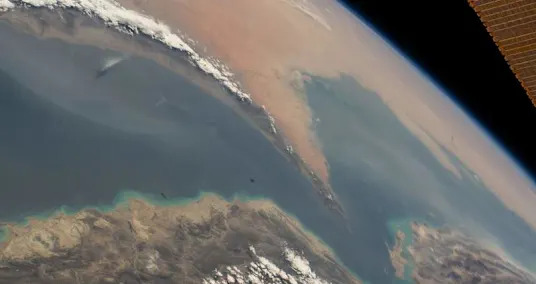
A massive dust storm, or haboob, swept across the Sahara Desert from western Algeria into Mauritania, Morocco, Western Sahara and the Canary Islands on March 30. The dust stretched for more than 1,000 miles.
As meteorologists observed the dust storm from space via weather satellites, social media users captured the incoming dust storm on camera. One video shows a thick wall of dust and sand moving toward a resident of the town of Tindouf, near the Mauritanian, Western Saharan and Moroccan borders.
How does the dust affect tropical storms in the Atlantic?
While this storm didn't make it too far off the coast, significant amounts of dust can drift westward from Africa across the Atlantic beginning in May. This can inhibit tropical storm formation, or the strengthening of an existing system, because the dusty air has about 50% less moisture than the typical tropical atmosphere.
Strong winds in the dust layer can also substantially increase the vertical wind shear in and around the storm environment, potentially disrupting any storm that forms.
LATEST POSTS
- 1
 Manual for 6 famous sorts of cheddar
 - 2ISS astronauts spy airglow and dwarf galaxy | Space photo of the day for Jan. 13, 2026
- 3When darkness shines: How dark stars could illuminate the early universe
- 4NASA loses contact with its Maven spacecraft orbiting Mars for the past decade
- 52 ways you can conserve the water used to make your food


- German state railway loss widens, passengers warned of trouble ahead
- How a toxic self-improvement trend with a funny name took over your feed
- Defeating An inability to embrace success in Scholarly world: Individual Victories
- IDF kills senior PIJ Gaza City Brigade cmdr. who infiltrated Kibbutz Nahal Oz on Oct. 7
- 6 Web-based Course Stages for Successful Learning and Educating
- Miley Cyrus details her fear of paper, says fiancé Maxx Morando opens their packages outside: 'That's really why I got engaged'
- With Obamacare premium hikes, more people opting for no coverage or cheaper plans
- Report: Thailand strikes deal with Iran for safe passage of Hormuz
- The 15 Most Powerful Forerunners in Business