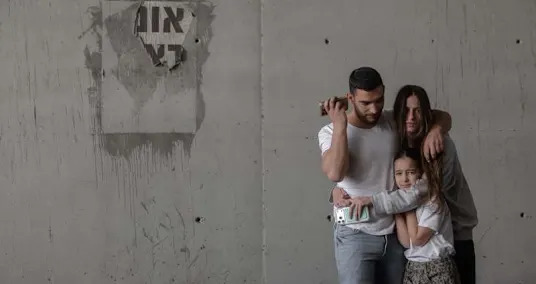
Protests took place in Tel Aviv, Jerusalem, Haifa, and Beersheba, as a survey found broad but uneven support among Jewish Israelis for Operation Roaring Lion.
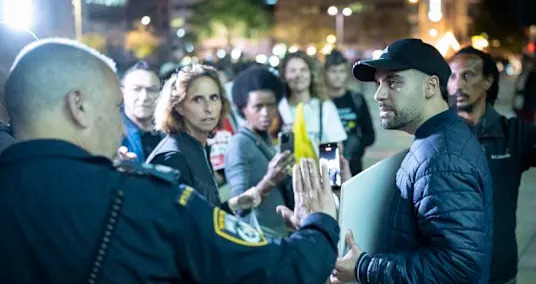
Israel Police arrested 21 anti-war protesters Saturday night as demonstrations against the conflict with Iran expanded in multiple cities despite restrictions on public gatherings.
Protests took place in Tel Aviv, Jerusalem, Haifa, and Beersheba, with hundreds of participants reported in Tel Aviv and Jerusalem and about 100 in Haifa, marking the largest turnout since weekly demonstrations began. Authorities said 13 people were arrested in Tel Aviv and eight in Haifa.
Police said the gatherings were not approved under Home Front Command regulations that ban events with more than 50 people. Officials said the increase in turnout followed calls by groups opposing the government to protest despite the restrictions.
“During a situation assessment that took place at the scene with a Home Front Command representative… it was clarified that there was a real risk to human life and accordingly, Yarkon [precinct] police commander Tzachi Sharabi ordered the gathering to be dispersed,” police said.
Hadash-Ta’al chairman Ayman Odeh, an Arab lawmaker involved in the protests, criticized the police response, calling officers fascists “in the service of the government” and saying they were afraid of “the heroic citizens who went out, despite everything, to make their voice heard.”

Survey shows broad, uneven support for war
The demonstrations come as a March 2026 survey by the Israel Democracy Institute found broad but uneven support among Jewish Israelis for Operation Roaring Lion. Support was strongest on the Right at 87% and about half on the Left.
The survey also found that Jewish and Arab respondents largely agreed that Iran’s resilience has been stronger than expected. Most Jewish respondents said Israeli society could sustain the campaign for up to one month, while 28% said as long as needed. Arab respondents were less optimistic about how long the public could endure the conflict.
A majority of Jewish respondents said Prime Minister Benjamin Netanyahu’s decision was driven by security considerations, while most Arab respondents viewed it as political.
LATEST POSTS
- 1
 At 72, Kathie Lee Gifford says aging isn’t what she expected. 'The golden years? It’s a lie.’
 - 2The 15 Most Powerful Forerunners in Business
- 3New movies to watch this weekend: See 'We Bury the Dead' in theaters, rent 'Wicked: For Good,' stream 'The Unbreakable Boy' on Starz
- 45 Language Learning Applications
- 5Twelve injured near Beit Shemesh, reports of shrapnel impact in Eilat as Iran targets Israel




- Involved Vehicles for Seniors: Track down the Best Picks for Solace and Dependability
- One perk to marrying Richard Marx later in life? 'We don't have time' for stupid arguments, says Daisy Fuentes.
- Deadly Switzerland ski resort fire was likely started by sparklers attached to champagne bottles, officials say
- A Manual for Pick Dependable Vehicle Rental Administrations For 2024
- Elite Execution Wall televisions for Film Darlings
- Passover under fire: Israelis balance fatigue with cautious hope after month of war
- Drones, physics and rats: Studies show how the people of Rapa Nui made and moved the giant statues – and what caused the island’s deforestation
- Watch comet C/2026 A1 plunge toward the sun online this week
- Finding the Universe of Workmanship: Individual Encounters in Imagination